
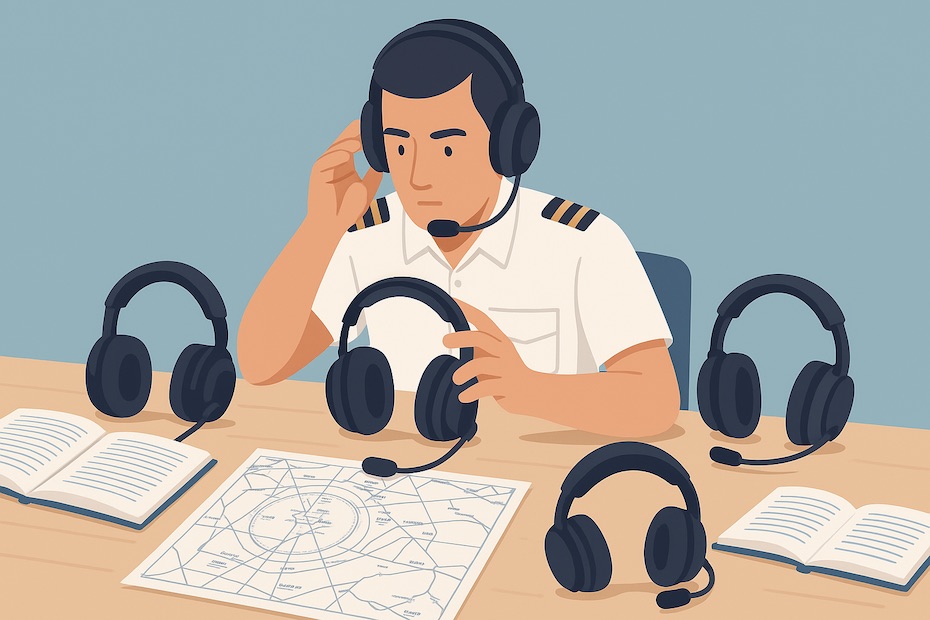
You should consider headsets like the Bose A30, Lightspeed Zulu 3, and David Clark H10-13.4 if you want clear communication, long-term comfort, and dependable noise protection in the cockpit.
In this article, you’ll find seven of the best aviation headsets trusted by pilots today. Each one serves a unique purpose—whether you’re a student on a budget or a professional flying multiple legs a day. You’ll see how these headsets perform in real cockpits, what features matter most, and which option aligns with your flying profile.
1. Bose A30 Aviation Headset – Elite Comfort and Control
The Bose A30 is widely regarded as the gold standard for professional pilots. It offers advanced active noise reduction (ANR) with three customizable modes, letting you adjust based on aircraft type and environment. This flexibility makes it equally suitable for piston, turboprop, or jet operations.
The lightweight frame and reduced clamping force mean less fatigue on long cross-country flights. Battery life extends up to 45 hours on AA batteries, and the headset supports panel-powered operation. With Bluetooth connectivity for audio and calls, you can integrate modern functionality without sacrificing cockpit safety.
For full-time commercial pilots, the A30 is a top-tier investment. It keeps you sharp on long duty days, reducing noise fatigue while maintaining crystal-clear ATC communication.
2. Lightspeed Zulu 3 – Balanced Performance
If you want an aviation headset that balances comfort, durability, and ANR at a slightly lower price than Bose, the Lightspeed Zulu 3 is your pick. Its reinforced cables, premium ear seals, and ergonomic design stand up to daily use, even in training or charter operations.
Zulu 3 includes Bluetooth for audio streaming and phone calls, plus customizable features through the Lightspeed FlightLink app. The ANR is strong, though not as refined as Bose, but plenty capable for single-engine and light twin environments.
Pilots who fly regularly but not exclusively—such as CFIs, regional pilots, or private owners—often choose the Zulu 3 because it balances high-end comfort with rugged construction.
3. David Clark H10-13.4 – Rugged and Proven
The David Clark H10-13.4 is the most recognized passive noise reduction (PNR) headset in aviation. Flight schools around the world still rely on it because it’s virtually indestructible. With a noise reduction rating of ~24 dB, it blocks enough cockpit noise for most GA environments without requiring batteries.
The headset is built with gel ear seals, a comfortable headband, and a flexible boom mic. Because it has no electronics, you never worry about power failures mid-flight. Many pilots keep it as a dependable backup even after upgrading to ANR models.
For students, this headset is often the first purchase. It lasts years, holds resale value, and reinforces the rule that simplicity is sometimes the best value.
4. David Clark DC ONE-X – Hybrid Durability
David Clark modernized their design with the DC ONE-X, combining their rugged legacy with ANR and Bluetooth. At 12.3 ounces, it’s lighter than the H10-13.4, with fold-flat architecture for storage in smaller flight bags.
The headset delivers around 30–35 hours of ANR runtime on AA batteries. Bluetooth audio and phone pairing allow for cockpit flexibility while maintaining strong ATC clarity. The suspension system also improves comfort for longer flights.
Pilots who value David Clark toughness but want upgraded features often choose the DC ONE-X. It’s a bridge between traditional durability and modern cockpit convenience.
5. Faro G2 PNR – Affordable Passive Option
The Faro G2 PNR is an entry-level headset priced below $200, making it ideal for student pilots on a strict budget. It offers ~26 dB passive noise reduction, dual volume controls, and surprisingly comfortable gel ear seals.
While it lacks ANR, its performance in smaller GA cockpits is strong enough for training missions. It’s also one of the lightest passive options available, helping reduce head pressure during long lessons.
For students who need immediate affordability, the Faro G2 ensures you can train effectively without overspending. Many pilots use it as a starter headset before upgrading later.
6. Lightspeed Sierra – Mid-Range ANR
The Lightspeed Sierra is a mid-priced ANR headset that delivers many of the Zulu 3’s strengths at a lower cost. It offers active noise reduction, Bluetooth connectivity, and plush comfort for extended wear.
It runs on AA batteries with about 40 hours of life and features automatic shutoff to conserve power. The Sierra also integrates auxiliary inputs, so you can listen to music or use iPad training apps during non-critical phases of flight.
This headset is perfect if you want ANR without stretching to premium-tier prices. Many private pilots consider it the sweet spot between affordability and advanced features.
7. Bose ProFlight Series 2 – Ultra-Light In-Ear Design
The Bose ProFlight Series 2 stands out with its unique in-ear design. At only 4.5 ounces, it eliminates the bulk of traditional headsets while still providing ANR and Bluetooth.
It’s tailored for quieter turbine or jet cockpits, where earbud-style comfort is preferred under helmets or for long-haul use. The Series 2 comes with three sizes of ear tips for a secure fit and retains Bose’s clarity for ATC and intercom communications.
This is not for everyone—some pilots dislike in-ear setups—but for airline crews and turbine operators, it offers maximum comfort on flights lasting 8+ hours.
Comparing Your Options
Here’s how to think about headset selection based on your flying profile:
- Full-time or airline pilots: Bose A30, Bose ProFlight Series 2.
- Frequent GA pilots and instructors: Lightspeed Zulu 3, David Clark DC ONE-X.
- Training or budget-conscious: David Clark H10-13.4, Faro G2 PNR.
- Mid-range balance: Lightspeed Sierra.
By combining clarity, fit, and endurance, these headsets ensure you protect your hearing and communicate with confidence.
Best Pilot Headset Choices
- Bose A30 for premium ANR and comfort.
- Lightspeed Zulu 3 for durability and balance.
- David Clark H10-13.4 for proven affordability.
In Conclusion
Your headset is not just an accessory—it’s an investment in your safety, communication, and long-term hearing health. By aligning your choice with your flying profile—whether you’re a student pilot, instructor, or airline professional—you’ll gain the right mix of durability, comfort, and clarity. The seven headsets highlighted here represent the industry’s best, ensuring you can fly with confidence and performance on every mission.

Jared Ailstock is Managing Partner at AIP Capital with over 15 years of experience in aviation finance and investment. He specializes in global aviation strategy, asset-backed transactions, and sustainable growth across the aerospace industry.