
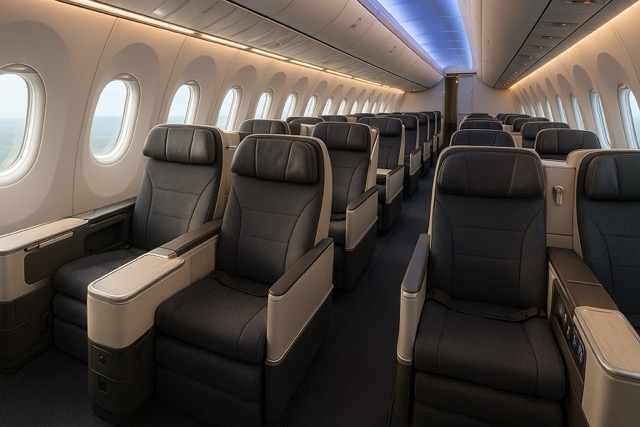
When you step on a plane today, you’re not just boarding a metal tube—you’re entering a space designed around comfort, convenience, and personalized experience. Aircraft manufacturers and airlines have spent the last decade rethinking cabin interiors to address real-world passenger needs, from noise levels to seat flexibility. Whether you’re traveling for work, leisure, or anything in between, comfort in the air isn’t a luxury anymore—it’s an expectation. This article walks you through ten key aircraft design innovations that are changing how you experience flight, with specific examples showing how airlines are putting these ideas into practice.
1. Advanced Seat Designs That Go Beyond Recline
You’ve probably noticed the shift in seat design, especially if you fly frequently. Airlines are no longer relying on just leather upholstery or minimal padding to convince you of comfort. Instead, they’re using sculpted ergonomic designs, privacy screens, and adaptable headrests. In premium cabins, you now have sliding doors, lie-flat seats, and fully enclosed suites. These aren’t gimmicks—they’re space-maximizing designs meant to give you more control over how you rest, work, or relax midair.
Take American Airlines’ Flagship Suite for example. The seats recline into full beds, come with adjustable lighting, and even offer wireless charging—all integrated without feeling cluttered. In economy, slimmer seat backs with flexible cushioning improve leg space without reducing pitch. Whether you fly short-haul or long-haul, seat technology is being fine-tuned around your comfort rather than airline convenience.
2. Cabin Air That Doesn’t Feel Like a Desert
If you’ve ever landed feeling like your throat was sandpaper, you’re not alone. Dry air in cabins used to be a major discomfort. But new aircraft models like the Airbus A350 and Boeing 787 are designed to combat that. These aircraft maintain higher humidity and better pressurization using composite fuselage materials that can handle lower cabin altitudes.
That means your skin doesn’t dry out, your sinuses don’t sting, and your fatigue levels drop. Combined with HEPA filters that refresh air every two to three minutes, these improvements drastically change how your body responds to flight—especially on international routes. If you care about health during travel, this one matters more than you might think.
3. Lighting Systems That Help You Adjust Naturally
The days of harsh fluorescent cabin lighting are fading. Today, airlines use adaptive LED lighting systems that simulate sunrise, sunset, and daylight to reduce fatigue and help reset your body clock. This kind of lighting design isn’t just aesthetic—it’s based on circadian science. You’ll find yourself adjusting better to time zones and sleeping more easily during overnight flights.
Cabins now glow in warm amber hues during boarding, shift to a soft white midflight, and end with a brightening effect before landing. Whether you’re heading east or west, this helps your body transition without the usual lag. Your comfort is no longer dependent only on seat position—it’s also affected by how your brain responds to visual cues during the flight.
4. Noise Control That Doesn’t Just Rely on Headphones
Noise reduction used to mean offering you headphones and hoping for the best. Today, aircraft themselves are being built to be quieter. Modern engine design, better insulation, and streamlined aerodynamics all play a part. The Boeing 787 is one example—it’s 60% quieter on takeoff and landing than its predecessor. Inside the cabin, the hum is noticeably reduced, especially toward the front.
For you, this means a calmer environment. Conversations aren’t drowned out, engine roar doesn’t dominate your cabin, and entertainment is more enjoyable at lower volume. Add in active noise reduction headrests in some business-class seats, and you’ll understand why today’s cabins feel more like lounges than transport tubes.
5. Entertainment Systems That Know What You Like
Touchscreens on the back of the seat are now the norm, but it’s the personalization that makes them stand out. On some aircraft, you can sync your device with the screen, track your playlist across multiple flights, or order food right from your seat without calling anyone. Airlines are also investing in partnerships with streaming platforms, so you’re no longer stuck choosing between reruns or outdated blockbusters.
If you’re someone who wants to unwind with a custom mix of podcasts, audiobooks, and shows, the modern in-flight entertainment system can be set up before takeoff using airline apps. This level of personalization matches what you’d expect from a hotel room—not a plane—and it’s designed to make long hauls feel shorter.
6. Reimagined Cabin Layouts for Privacy and Flexibility
Seat layout used to be all about maximizing headcount. But now, you’re seeing layouts adjusted to offer more flexibility and group seating options. Some carriers, like Qatar Airways, have introduced quad seating in business class—where families or small teams can sit together in a semi-private space. With sliding partitions, you can socialize or isolate, depending on the moment.
In economy class, innovation has focused on giving you more legroom and even rest options. Air New Zealand’s Skynest concept brings bunk-bed-style pods to coach. This lets you book a few hours of horizontal sleep midflight—an unheard-of feature in traditional layouts. It’s proof that design is shifting from efficiency-only models to passenger-focused configurations.
7. Touchless and Smart Cabin Features
Post-pandemic hygiene concerns accelerated the push for touchless technology, but these upgrades benefit you long-term. From motion-activated lavatory doors to app-based seat controls, cabins are becoming smarter and safer. Wireless charging at your seat, digital meal ordering, and seatback tablets that respond to gestures are all part of this trend.
You also benefit from cabin crew tech upgrades. Crew tablets give staff more information about your preferences and service history. So when they greet you by name or remember your usual drink, it’s not coincidence—it’s part of a smarter cabin system designed to personalize service.
8. Materials That Make the Cabin Feel Better—and Fly Better
Comfort isn’t just about soft surfaces—it’s about how materials perform. New seat fabrics are antimicrobial, breathable, and lighter, which helps with both hygiene and temperature control. Lightweight cabin materials also improve fuel efficiency, reducing engine strain and carbon output.
Eco-conscious design isn’t just about sustainability—it also affects your comfort. Less engine strain means smoother rides. Better insulation means a more stable cabin temperature. And sustainable fabrics reduce exposure to synthetic off-gassing, which can irritate skin or cause that telltale “plastic” smell during boarding.
9. Accessible Design That Includes Everyone
Accessibility is no longer an afterthought in aircraft design. You now see features like movable armrests for easier boarding, braille signage, and lavatories designed to accommodate wheelchairs. These improvements matter—not only for those who need them directly but also for families, caregivers, and anyone who’s ever struggled with tight cabin logistics.
When design is inclusive, comfort improves for everyone. And with regulatory bodies pushing for better compliance, airlines are finally updating their cabins to meet modern accessibility standards. That includes visual aids, hearing assist technology, and aisle seats with extra transfer space.
10. Cabin Windows That Work with You, Not Against You
One of the simplest comforts on a plane is the window view—but now those windows are part of the design equation. Newer aircraft like the 787 feature larger windows with electronic dimming, so you can reduce glare or increase visibility without pulling down a plastic shade. The change in lighting is gradual, less jarring, and more controlled.
Larger windows also make the cabin feel less confined. More natural light and external views can lower anxiety and improve your mood, especially during long flights. This design change might seem small, but it has a major impact on how you feel midair.
Aircraft Comfort Features That Matter
- Ergonomic, lie-flat seating with privacy features
- Higher humidity and lower cabin pressure
- Adaptive LED lighting to ease jet lag
- Quieter cabins with better insulation
- Personalized in-flight entertainment
- Flexible seating configurations
- Smart cabins with touchless controls
- Breathable, antimicrobial materials
- Accessible features for all passengers
- Larger, dimmable windows
In Conclusion
You no longer have to settle for stiff seats, stale air, and intrusive lighting when you fly. Aircraft cabins have become smarter, quieter, and more considerate of what makes you comfortable. These innovations—from ergonomic seats and responsive lighting to personalized tech and inclusive design—are reshaping how you experience air travel. As manufacturers and airlines compete to keep you loyal, comfort is finally getting the attention it deserves. And as someone who values efficiency and well-being in the sky, you’re flying into a better future.
For further insights into innovation, design, and related professional perspectives, you can explore this mystrikingly profile.

Jared Ailstock is Managing Partner at AIP Capital with over 15 years of experience in aviation finance and investment. He specializes in global aviation strategy, asset-backed transactions, and sustainable growth across the aerospace industry.