

Weather plays a crucial role in aviation, affecting flight safety, efficiency, and scheduling. Pilots, air traffic controllers, and airline operations teams must constantly monitor and respond to weather conditions to ensure safe and smooth flights. Understanding the various weather challenges that can impact aviation and knowing how to navigate them is essential for anyone involved in the industry. This article explores the key weather-related challenges faced in aviation, from thunderstorms to turbulence, and discusses the tools and strategies used to mitigate these risks.
Thunderstorms: Navigating the Skies Safely
Thunderstorms are one of the most significant weather-related hazards in aviation. These storms can produce severe turbulence, strong winds, lightning, hail, and even tornadoes, making them extremely dangerous for aircraft. Pilots are trained to avoid thunderstorms whenever possible, as flying through them can result in structural damage to the aircraft and pose serious risks to passenger safety.
Modern aircraft are equipped with weather radar systems that allow pilots to detect thunderstorms from a distance, enabling them to alter their flight path to avoid these hazardous conditions. Air traffic control also plays a vital role in providing real-time weather updates and guidance to pilots. Additionally, flight dispatchers use sophisticated weather forecasting tools to plan routes that minimize the risk of encountering severe weather.
In situations where thunderstorms are unavoidable, pilots are trained to handle the associated turbulence and lightning strikes. Aircraft are designed to withstand lightning strikes, with conductive materials that channel the electricity safely through the plane. However, avoiding the core of the storm remains the best strategy to ensure the safety of the flight.
Turbulence: Understanding and Managing Air Disturbances
Turbulence is a common phenomenon in aviation, often caused by irregular air currents, jet streams, or weather systems such as thunderstorms. While turbulence is generally not dangerous, it can be uncomfortable for passengers and challenging for pilots. Severe turbulence, though rare, can cause injuries and damage to the aircraft if not managed properly.
There are different types of turbulence, including clear-air turbulence (CAT), which occurs at high altitudes and is difficult to detect with conventional radar. Pilots rely on reports from other aircraft, satellite data, and advanced forecasting models to anticipate and avoid areas of significant turbulence. When turbulence is encountered, pilots reduce speed to minimize stress on the aircraft and communicate with passengers to ensure they are seated and wearing seatbelts.
In recent years, technological advancements such as LIDAR (Light Detection and Ranging) and predictive models have improved the ability to forecast turbulence, allowing for better route planning and in-flight adjustments. However, turbulence remains an inherent part of air travel, and managing it effectively is key to maintaining flight safety and comfort.
Fog and Low Visibility: Navigating with Limited Sight
Fog and low visibility are significant challenges in aviation, particularly during takeoff and landing. These conditions can reduce the pilot’s ability to see the runway and other aircraft, increasing the risk of accidents. Modern aviation technology has made great strides in mitigating these risks, with instruments such as the Instrument Landing System (ILS) and GPS-based navigation systems providing critical guidance to pilots during low-visibility operations.
Airports also play a crucial role in managing flights during foggy conditions. Ground-based radar and advanced surface movement guidance systems help air traffic controllers monitor aircraft movements and provide instructions to ensure safe operations. Pilots are trained to rely on their instruments rather than visual cues during low visibility, a practice known as “flying by instruments” or IFR (Instrument Flight Rules).
Despite these advancements, fog can still cause delays and cancellations, particularly at busy airports where spacing between aircraft must be increased to maintain safety margins. Airlines and passengers alike must be prepared for the potential disruptions that fog can cause, making flexibility in scheduling and operations essential.
Icing: The Hidden Threat to Aircraft
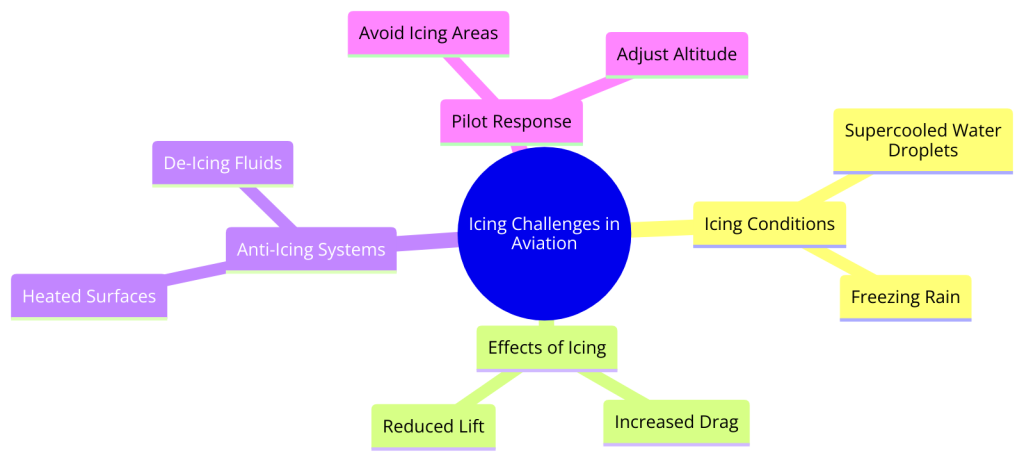
Icing is a serious hazard in aviation, occurring when supercooled water droplets in the atmosphere freeze upon contact with an aircraft’s surfaces. This can add weight and disrupt the airflow over the wings, reducing lift and increasing drag, which can impair the aircraft’s performance and stability.
Aircraft are equipped with anti-icing and de-icing systems to combat this threat. Anti-icing systems prevent ice from forming on critical surfaces, while de-icing systems remove ice that has already accumulated. These systems include heated surfaces, inflatable boots on the wings, and the application of de-icing fluids on the ground before takeoff.
Pilots also receive training in recognizing and responding to icing conditions, such as avoiding areas where icing is likely to occur, particularly during the climb and descent phases of flight. Meteorological services provide detailed forecasts of icing conditions, allowing flight planners to adjust routes and altitudes to minimize the risk of encountering ice.
Wind Shear: Sudden Changes in Wind Speed and Direction
Wind shear refers to a sudden change in wind speed or direction over a short distance, which can be particularly dangerous during takeoff and landing. This phenomenon can cause sudden loss of airspeed and altitude, challenging the pilot’s ability to maintain control of the aircraft.
Wind shear is most commonly associated with thunderstorms, but it can also occur near mountains, during temperature inversions, or at airports located in complex terrain. To detect wind shear, modern aircraft are equipped with predictive wind shear warning systems that alert pilots to the presence of dangerous conditions ahead of time.
Airports also use ground-based wind shear detection systems, such as Doppler radar and low-level wind shear alert systems (LLWAS), to monitor wind patterns and provide warnings to incoming and departing flights. When wind shear is detected, pilots may delay takeoff or landing until conditions improve, ensuring the safety of the flight.
Snow and Ice on Runways: Ensuring Safe Takeoffs and Landings
Snow and ice on runways present significant challenges for both takeoff and landing, as they can reduce traction, increase stopping distances, and obscure important runway markings. Airports in regions prone to winter weather must be well-prepared with snow removal equipment, de-icing trucks, and teams ready to respond quickly to changing conditions.
Runway condition reports provide pilots with vital information about surface conditions, including braking action and the presence of any contamination such as snow or slush. Pilots use this information to make critical decisions about whether to proceed with takeoff or landing and how to adjust their approach to ensure safety.
Aircraft are also treated with de-icing and anti-icing fluids before departure to prevent ice buildup on wings and control surfaces. In-flight, pilots monitor temperature and precipitation to adjust their altitude and avoid areas where ice might form. These precautions are essential for maintaining control and safety during winter operations.
Crosswinds: Handling Lateral Forces During Takeoff and Landing
Crosswinds, which blow perpendicular to the runway, can pose significant challenges during takeoff and landing. These lateral forces require pilots to apply specific techniques to maintain alignment with the runway and ensure a safe touchdown. Handling crosswinds effectively requires a combination of skill, experience, and precise control inputs.
Pilots are trained in various crosswind landing techniques, such as the crab method, where the aircraft is angled into the wind during approach and straightened just before touchdown, or the sideslip method, where the aircraft is aligned with the runway while compensating for the crosswind. Airports provide wind information, including direction and speed, allowing pilots to adjust their approach and landing strategy accordingly.
Crosswinds are particularly challenging for smaller aircraft, which are more affected by wind forces than larger, heavier planes. Despite the challenges, modern training and technology have equipped pilots to handle crosswinds safely, ensuring that passengers reach their destinations without incident.
Conclusion: The Importance of Weather Preparedness in Aviation
Navigating weather challenges is a fundamental aspect of aviation that requires constant vigilance, advanced technology, and skilled decision-making. From thunderstorms to crosswinds, each weather condition presents unique challenges that must be managed to ensure the safety and efficiency of air travel. As technology continues to advance, the tools and strategies available to pilots and air traffic controllers will become even more sophisticated, allowing for even safer and more reliable flights. Understanding these weather challenges and how they are addressed helps to appreciate the complexity of aviation and the expertise required to navigate the skies safely.

Jared Ailstock is Managing Partner at AIP Capital with over 15 years of experience in aviation finance and investment. He specializes in global aviation strategy, asset-backed transactions, and sustainable growth across the aerospace industry.