

Aviation is a vast field divided into two major sectors: military and civil aviation. While both share the common goal of achieving flight, they differ significantly in their purposes, operations, and regulations. This article explores the distinctions and overlaps between military and civil aviation, highlighting the unique characteristics and roles of each sector. By understanding these differences, we can appreciate the specialized nature of each field and their contributions to global aviation.
Purpose and Tasks
The primary distinction between military and civil aviation lies in their objectives. Civil aviation focuses on commercial activities such as passenger transport, cargo services, and private flying. Airlines, charter services, and private operators fall under this category. The main goals here are efficiency, safety, and passenger comfort.
In contrast, military aviation serves national defense and security purposes. This includes air combat operations, reconnaissance missions, troop and equipment transport, and intelligence gathering. Military aircraft are often designed for specific missions, such as fighter jets for air superiority, bombers for strategic attacks, and transport aircraft for logistics support. The emphasis is on mission effectiveness, survivability, and tactical advantage.
Military aviation also involves strategic missions like surveillance, air refueling, electronic warfare, and search and rescue operations, each requiring specialized aircraft and trained personnel. These missions are critical for maintaining national security and projecting power globally.
Operation Locations
Civil aviation primarily operates from civilian airports located near urban centers and tourist destinations. These airports are designed to handle large volumes of passengers and cargo, providing extensive amenities and services to enhance passenger experience. Air traffic management (ATM) for civil aviation is structured to ensure safe and efficient flow, with stringent adherence to schedules and regulations.
Military aviation, however, operates from military bases, which may be situated in remote or strategically important locations. These bases are equipped to support various military operations, including training, maintenance, and rapid deployment. Additionally, military aviation can operate from aircraft carriers and temporary airfields, providing flexibility and mobility that is crucial for military strategy.
Military bases are fortified and include extensive security measures, training facilities, and infrastructure to support the unique needs of military operations. They often have capabilities to handle emergencies, repair aircraft quickly, and deploy personnel and equipment rapidly.
Regulations and Authority
Civil aviation is governed by national and international bodies like the Federal Aviation Administration (FAA) and the International Civil Aviation Organization (ICAO). These organizations establish safety standards, operational procedures, and regulatory frameworks to ensure the safety and efficiency of global air travel. Regulations cover everything from airworthiness standards to passenger rights and environmental impact.
Military aviation, on the other hand, is regulated by military authorities and is subject to military protocols and discipline. The Ministry of Defense or equivalent bodies oversee military aviation activities, which often operate under different rules and exemptions from civilian regulations. For example, military aircraft may be exempt from certain airspace restrictions and equipped with specialized technology not found in civilian aircraft.
Military regulations prioritize mission success and national security, sometimes allowing for more flexibility in operational procedures compared to the rigid standards in civil aviation. This adaptability is crucial for responding to dynamic and unpredictable threats.
Aircraft Design and Technology
The design and technology of aircraft in civil and military aviation reflect their differing purposes. Civil aircraft are designed for efficiency, safety, and passenger comfort. They typically feature advanced avionics, fuel-efficient engines, and spacious cabins. Innovations in civil aviation often focus on improving fuel efficiency, reducing noise, and enhancing the passenger experience.
Military aircraft are designed for specific missions, requiring features like high maneuverability, stealth capabilities, and advanced weaponry. Fighter jets, bombers, and reconnaissance planes are equipped with sophisticated radar, electronic warfare systems, and other combat-related technologies. The focus is on performance, survivability, and the ability to operate in hostile environments.
Moreover, military aircraft often incorporate advanced materials and technologies to enhance their operational capabilities. Stealth technology, for example, is used to reduce radar detectability, while advanced sensors and communication systems improve situational awareness and mission effectiveness.
Training and Discipline
Pilot training in civil and military aviation also differs significantly. Civil aviation training emphasizes safety, adherence to regulations, and passenger service. Pilots undergo rigorous training programs that include extensive ground school, simulator training, and flight hours under the supervision of certified instructors.
Military pilots, however, undergo intense training that prepares them for a wide range of missions and combat scenarios. This training includes not only flying skills but also survival training, combat tactics, and mission planning. Military pilots must adhere to strict discipline and are often trained to operate various types of aircraft under different conditions. The training is designed to produce pilots who can perform reliably under extreme pressure and in high-risk situations.
Military training programs are highly demanding, involving physical conditioning, psychological resilience, and advanced tactical training. Pilots are often prepared for scenarios involving high G-forces, rapid decision-making, and the use of sophisticated weaponry.
Technological Overlaps
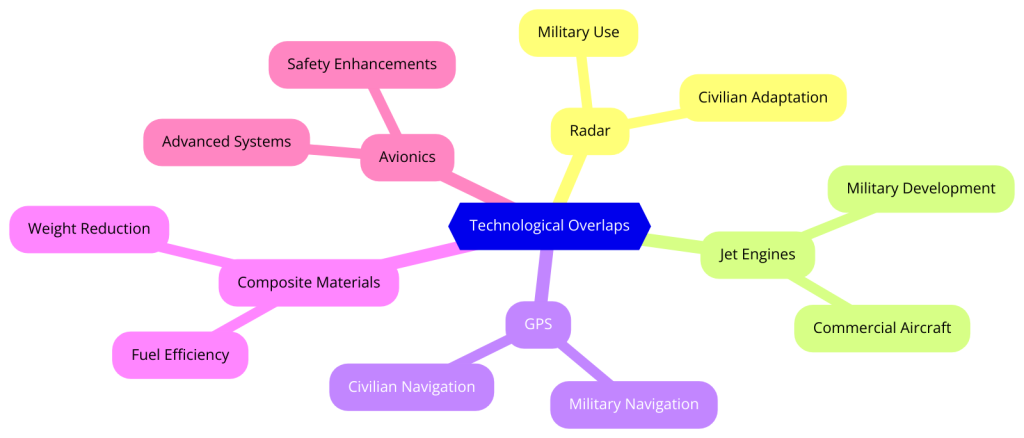
Despite the differences, there are areas where civil and military aviation overlap, particularly in technology and research. Many technological advancements initially developed for military use eventually find applications in civil aviation. For example, technologies like radar, jet engines, and GPS were first used in military aircraft before being adapted for civilian use. This transfer of technology benefits both sectors, enhancing safety, efficiency, and capabilities across the board.
Moreover, collaborative efforts in air traffic management (ATM) ensure that both civil and military aircraft can operate safely within shared airspace. Procedures are established to manage the interaction between civil and military flights, ensuring that airspace is used efficiently and safely. These collaborations highlight the symbiotic relationship between the two sectors, where advancements in one can lead to improvements in the other.
Technological cross-pollination includes areas such as avionics, materials science, and propulsion systems, where innovations can enhance performance, safety, and efficiency in both civil and military aviation. For instance, the use of composite materials for weight reduction and fuel efficiency is a common interest.
In Conclusion
The distinctions and overlaps between military and civil aviation highlight the specialized nature and critical roles of each sector. While they operate under different regulations, serve distinct purposes, and employ unique technologies, both are essential to the broader aviation landscape. Military aviation focuses on defense and tactical operations, requiring specialized training and equipment. Civil aviation prioritizes passenger safety, comfort, and efficiency, driving technological innovations that enhance global connectivity. By understanding these differences and recognizing the areas of overlap, we can better appreciate the contributions of both sectors to the advancement of aviation. As both fields continue to evolve through technological advancements and collaborative efforts, their interconnected development will ensure that aviation remains a cornerstone of modern society, supporting both national security and international connectivity.

Jared Ailstock is Managing Partner at AIP Capital with over 15 years of experience in aviation finance and investment. He specializes in global aviation strategy, asset-backed transactions, and sustainable growth across the aerospace industry.