
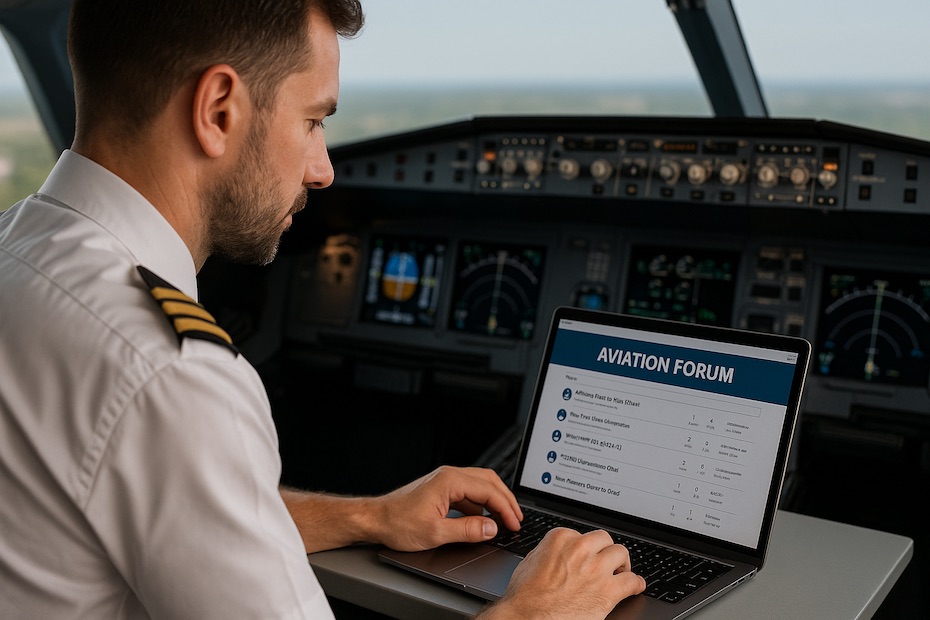
You strengthen your flying skills, expand your professional network, and stay ahead of industry trends when you connect with the right pilot communities online.
This article introduces seven of the most valuable networks where active pilots, instructors, and aviation professionals share practical experience, training tips, and career guidance. You’ll learn where to invest your time and how each community helps sharpen your competitive edge in today’s fast-paced aviation world.
1. Professional Pilots Rumour Network (PPRuNe)
PPRuNe is one of the most established online communities for professional aviators. Originally created as a discussion board for airline and military pilots, it’s now a global hub for sharing real operational knowledge.
You’ll find active threads discussing airline contracts, simulator training, incident analysis, and the daily realities of life in the cockpit.
What makes PPRuNe valuable is its authenticity—contributors include airline captains, first officers, air traffic controllers, and industry recruiters. These aren’t casual enthusiasts; they’re seasoned professionals exchanging information that directly impacts pilot performance and career strategy.
If you’re managing your career in a structured environment such as an airline or training organization, PPRuNe gives you a pulse on what’s happening across the industry before it hits the news. Topics often include hiring cycles, aircraft type transitions, and operational best practices, all discussed by people living it every day.
2. Reddit’s r/flying
The subreddit r/flying is an excellent gathering point for both aspiring and active pilots. Unlike niche technical forums, this community thrives on open discussion, mentorship, and peer-to-peer problem solving.
Posts range from “Passed my first solo today!” to “How do I prepare for the instrument checkride?” You’ll interact with instructors, flight students, and experienced captains who contribute insights in real time.
What makes r/flying useful is its democratic structure. You can ask questions anonymously, receive direct feedback from thousands of aviators, and see real-time conversations about topics from weather briefings to avionics upgrades.
Engagement here is about continuous improvement. When you post thoughtfully—sharing experiences, asking specific questions, or helping new pilots—you’ll quickly build credibility and learn from others who’ve faced the same training challenges.
3. Aviation Special Interest Group (AVSIG)
As one of the oldest aviation discussion groups, AVSIG continues to attract pilots and aviation professionals seeking serious, disciplined exchanges. Founded in 1981 on CompuServe, AVSIG now operates as a modern web-based forum with a global membership of professional pilots, dispatchers, and controllers.
Its tone is more formal than Reddit but highly focused. Topics typically include IFR operations, human factors, maintenance oversight, and regulation updates. That focus makes AVSIG particularly valuable if you’re looking for precise, technical conversation over casual socializing.
Membership here encourages a mindset of professionalism and accountability. You’ll interact with experts who approach aviation not just as a passion, but as a disciplined craft that demands continuous technical learning.
4. AOPA Online Community
If you fly general aviation, AOPA (Aircraft Owners and Pilots Association) offers an unmatched online platform combining networking, advocacy, and knowledge-sharing. Members can participate in regional forums, webinars, and Q&A discussions directly hosted by AOPA experts.
Within the AOPA forums, you’ll find detailed conversations about aircraft ownership, maintenance planning, insurance, and flight safety. The association’s credibility adds authority to every post, and its moderators ensure that information remains accurate and current.
For private and recreational pilots, this network is also a gateway to resources like flight planning tools, medical certification guidance, and legal support programs. Engaging here positions you within a well-organized professional ecosystem that supports both your flying proficiency and your long-term aviation goals.
5. VATSIM (Virtual Air Traffic Simulation Network)
If you use simulators as part of your proficiency training, VATSIM bridges the gap between virtual and real-world aviation experience. The network connects over 190,000 registered users who fly simulated aircraft while interacting with live air traffic controllers—replicating professional ATC operations in real time.
VATSIM is not a game. Many airline and corporate pilots use it to rehearse procedures, practice IFR navigation, or maintain situational awareness between real-world flights.
Participating in this network helps refine your communication skills and decision-making in controlled, high-stress conditions that mirror real cockpit workloads.
It’s also a chance to train leadership under pressure. You’re part of a dynamic virtual airspace managed by volunteers who bring the precision and structure of real ATC operations. This type of immersion complements your simulator sessions and helps you transfer that discipline back into live flight operations.
6. AirlinePilot.Life
AirlinePilot.Life serves as a mentorship platform specifically for those pursuing airline careers. The site is managed by certified flight instructors and current airline pilots who mentor future professionals through structured discussions.
You’ll find detailed threads on pilot training costs, time-building strategies, regional airline hiring, and upgrade pathways to major carriers. Each conversation reflects actual pilot experiences rather than marketing content, which gives you clarity on how to navigate the financial and career realities of professional aviation.
What makes this forum particularly helpful is its mentorship model. Users receive direct feedback from instructors who are active in training academies and airline flight decks. Whether you’re evaluating ATP programs or considering type ratings, you’ll find actionable guidance that minimizes costly missteps early in your career.
7. FlightAware and PilotEdge Community
If you prefer operational learning blended with live simulation, FlightAware and PilotEdge communities provide that real-time connection. FlightAware allows you to track flights worldwide, analyze routes, and study aircraft performance patterns. Its forums and blog discussions often highlight real-time operational data and dispatch efficiency insights.
PilotEdge, on the other hand, provides a paid professional-grade ATC simulation environment for users who want to train in realistic communication scenarios. Members of its online community often share radio communication techniques, IFR clearances, and situational awareness drills.
Together, these communities allow you to refine your decision-making and systems management. Whether you’re using a home simulator or managing fleet logistics, they give you tools to think like a systems-oriented professional rather than just a technical operator.
How to Choose the Right Community for Your Goals
When deciding which network fits your aviation journey, evaluate three dimensions: relevance, activity level, and expertise depth.
Relevance ensures that the forum matches your specific flying category—student, GA pilot, instructor, or airline professional. Activity level matters because inactive communities offer little return on engagement. Expertise depth ensures you’re learning from qualified professionals, not unverified opinions.
Here’s a short guide to filter your options:
- Join one community aligned with your current license level.
- Add one network where airline or simulator pilots discuss procedures.
- Maintain engagement on one mentorship platform where career advice is practical, not promotional.
This balance keeps your information sources diverse and your network productive.
Common Mistakes to Avoid in Pilot Communities
Many pilots underestimate the long-term value of their online presence. Treat every post as part of your professional reputation. Avoid vague questions, unverified claims, or casual remarks that could undermine your credibility.
Common missteps include:
- Asking “what’s the easiest way” instead of “how can I improve this procedure?”
- Ignoring community etiquette or posting without researching prior threads
- Over-relying on forums for decision-making instead of consulting certified professionals
When you treat online engagement with the same discipline you bring to pre-flight preparation, your network becomes a training asset—one that builds your knowledge base and supports continuous growth.
How to Get the Most Value from Pilot Networks
Your engagement should be strategic. Instead of browsing aimlessly, set measurable goals—learn one new operational concept weekly, build five new professional contacts each quarter, and share your own experience once a month.
Track these results just like you’d log flight time: note what you’ve learned, who you’ve connected with, and how that knowledge improved your decision-making or flying accuracy. Over time, this process compounds into a powerful professional advantage.
When you engage consistently and give back to the community, you build a reputation of reliability and expertise. That credibility follows you both online and into your next cockpit opportunity.
What are the best online communities for pilots?
- Professional Pilots Rumour Network (PPRuNe)
- Reddit’s r/flying
- AVSIG and AOPA online forums
- VATSIM and PilotEdge training networks
Expand Your Network, Elevate Your Flying
Each of these seven online communities gives you something unique: operational knowledge, mentorship, or professional connection. The key is consistency—participate regularly, contribute meaningfully, and treat every interaction as professional development. Your online reputation becomes part of your brand as a pilot, influencing opportunities in training, recruitment, and collaboration.

Jared Ailstock is Managing Partner at AIP Capital with over 15 years of experience in aviation finance and investment. He specializes in global aviation strategy, asset-backed transactions, and sustainable growth across the aerospace industry.